Hydra AEP Genome Project Portal
The simple freshwater cnidarian polyps belonging to the genus Hydra are among the longest-studied and best-characterized
cnidarian research organisms, with the first experiments in Hydra
dating back to the 1700s. Hydra are notable for their exceptional
resilience, exhibiting negligible senescence and a nearly limitless
regenerative capacity. Hydra are also relatively simple,
possessing only a single life cycle stage and a small number of
well-defined cell types. These features, along with Cnidaria's phylogenetic
position as sister to Bilateria, makes Hydra a powerful system to
study fundamental biological principles including those related to
patterning, stem cell biology, aging, and regeneration.
The advent of powerful tools and resources — including a reference genome, a
single-cell gene expression atlas, knock-down techniques, and
transgenesis — has enabled Hydra researchers to explore topics such
as regeneration and patterning at the molecular level. However,
complicating the effective use of these tools is the fact that these
resources were developed using different genetic backgrounds. Specifically,
the original reference genome was generated using strain 105 of Hydra vulgaris, formerly H. magnipapillata, whereas all
transgenic Hydra lines and the single-cell expression atlas were
generated using the AEP strain.
To provide a genomic resource better suited for strain AEP-derived genomic
and transcriptomic data, and to better enable comparative molecular
research in cnidarians, we sequenced, assembled, and annotated a
chromosome-level assembly for the AEP strain of H. vulgaris. In
addition, we generated and annotated a draft genome assembly for another
brown Hydra species, H. oligactis.
This genome portal is intended to provide genomic and transcriptomic
resources for researchers interested in Hydra molecular biology.
These include browsers for the strain AEP H. vulgaris and H. oligactis genome assemblies and an interactive interface for
interrogating the H. vulgaris single-cell gene expression atlas.
We also provide functional annotation data for the strain AEP genome gene
models, including protein domain composition and orthology predictions.
Finally, we provide data on chromatin accessibility, histone modifications,
and sequence conservation that shed light on the Hydra
cis-regulatory landscape.
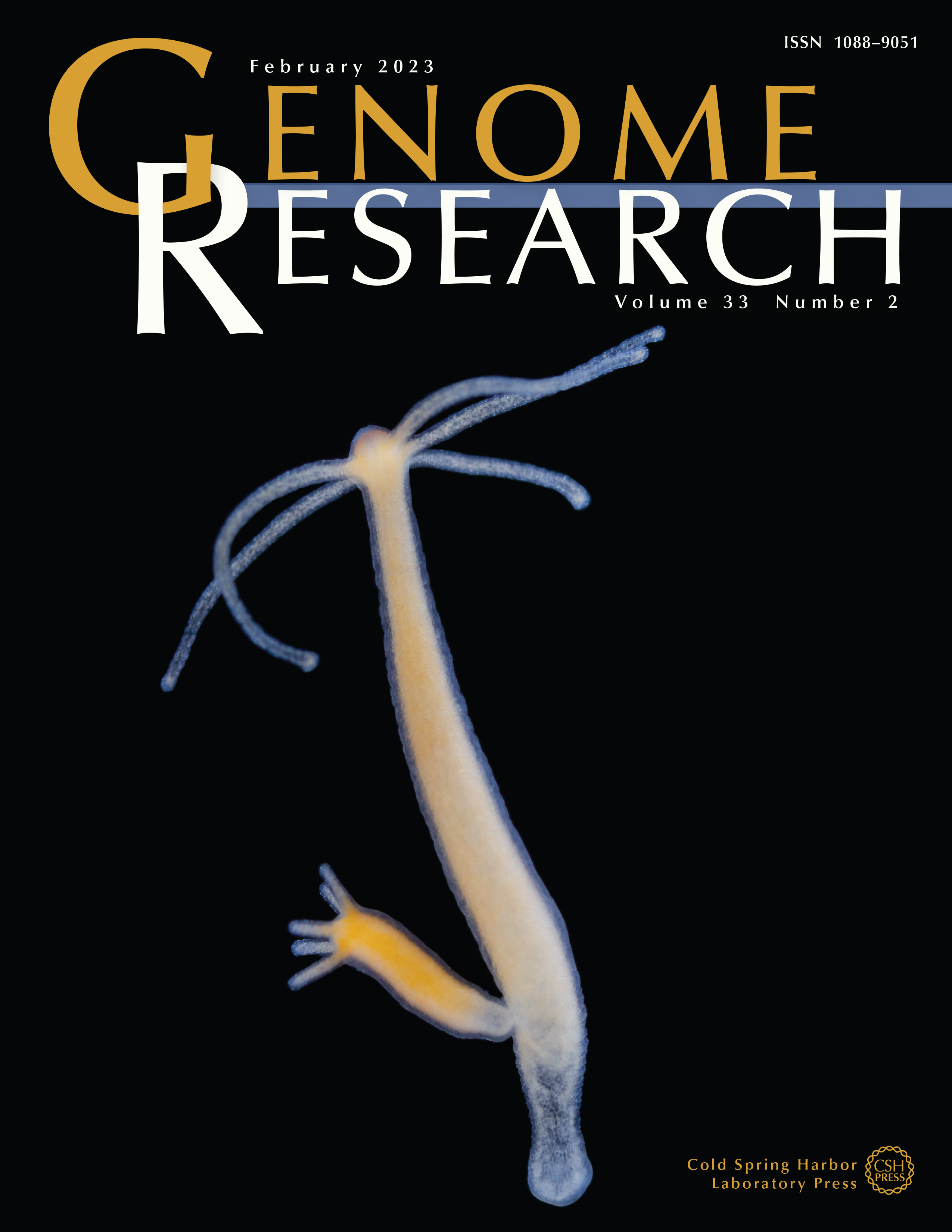
Hydra vulgaris Image Credit:
Cazet et al., Genome Res. 33: 283-298, 2023